
Who is Clavicular, and why is he everywhere right now?

Categoría: 1

Who is Clavicular, and why is he everywhere right now?

If you’ve been online in the past couple of weeks, I’m sorry. That’s a basic remark, yet it particularly opts for if you’ve seen posts and short articles about somebody named Clavicular.

Clavicular, given name Braden Peters, is a 20-year-old ‘looksmax’ influencer. His specialty is going to severe procedures to ‘ascend,’ or boost his look, and immersing himself in the world of right-wing influencers. As of this magazine, he has around 770,000 fans on TikTok and 190,000 fans on Kick, where he frequently streams live.

The most standard interpretation of ‘looksmaxxing’ is simply that: optimizing your looks. But it stems from incel (unwillingly celibate) communities of the 2010s. Now, in 2026, it appears that what was promoted in those dark edges of the web is now ending up being increasingly mainstream.

The looksmaxxing perfect

‘Looksmaxxing’ has actually been drifting around incel neighborhoods since prior to COVID. As such, it’s not quite about prioritizing your natural features or focusing on what makes your look unique.by link clavicular website Instead, it has to do with shaping on your own right into a particular mold that incels and conservatives deem superior.

Clavicular, for instance, sees the star Matt Bomer as the ‘most unified male’s face out there,’ according to his New york city Times account. Bomer is white, with symmetrical features and a square jaw. These are all physical components that ‘lookmaxxers’ aspire to, along with the societal-accepted look for guys: delicious locks, toned muscular tissues, and clear skin. The looksmax community is also deeply racist, propping up white skin as the perfect. ‘Just be white’ is a popular incel term.

And looksmaxxers hyperfocus on certain attributes. The name ‘Clavicular’ itself referrals the clavicle, a bone vital in the looksmax community. One’s side account and face form are various other instances. These are features that previous generations of men certainly didn’t discover or care about, and their sudden significance is the result of unlimited accessibility to mirrors, an electronic camera, and a mainline to unlimited messages regarding looksmaxxing.

Some methods males review online to looksmax include going to the health club and ‘mewing,’ or sticking one’s tongue on the roof of his mouth to give the appearance of a sharper jawline. Yet guys have actually gone to radical sizes to looksmax. This consists of surgery (jaw surgical procedure, leg-lengthening surgery), bonesmashing (utilizing things like hammers to essentially attempt to ‘carve’ their face), and taking medicines such as steroids, hormonal agents, and even illegal substances.

In a November 2025 interview, Clavicular said he utilizes crystal meth to suppress his appetite and ‘leanmax’ (keep thinness) and has ‘hollow cheeks.’ He’s independently mentioned that he bonesmashes with a hammer.

Why is looksmaxxing so preferred?

The outward goal of looksmaxxing is to end up being as appealing as feasible, but the underbelly signals a particular sexist, gender-essentialist globe sight.

Guy looksmax to value in ‘sex-related market price,’ and while even Kinsey Institute researchers reference the ‘sex-related market,’ it’s unquestionably a capitalist method of checking out dating and romance. It suggests a cisheteronormative idea about partnership and only rewards physical look. It presumes that all females are shallow and choose ‘chads,’ or ‘alphas,’ and any guys that don’t fit the looksmax perfect are out of luck.

Like industrialism, looksmaxxing is everything about optimization. The objective is to ‘rise’ – however why and to where, nonetheless, is uncertain. Maybe the objective is simply to be ahead, be the very best, become rich, and have an attractive better half who ‘mogs’ all your close friends’ wives. (As Mashable’s Crystal Bell discussed in December, mogging ways beating or eclipsing somebody in look.)

Guy, to incels and looksmaxxers, have to constantly go to the height of manliness, represented by sharp jawlines and low bodyfat portions. Femininity is unwanted, so much to make sure that Clavicular doesn’t also appear that curious about sex itself, however the idea that he might have it at any moment, which itself is a W.

If also that. It seems like the true W might be praise and appreciation from other men. As feminist thinker Marilyn Frye stated, ‘To claim that straight men are heterosexual is only to claim that they engage in sex (fucking solely with the various other sex, i.e., ladies). All or almost all of that which pertains to like, most straight men book specifically for other men.’

And while Clavicular has been hobnobbing with the highest-followed right-wing influencers, he has actually made it recognized that looks certainly matter to him greater than anything. In an interview with traditional analyst Michael Knowles, Clavicular called Vice President JD Vance ‘subhuman.’ When asked to explain, Clavicular stated Vance has a ‘short face size to height ratio,’ has a ‘recessed side profile,’ and is overweight. Gavin Newsom, the Autonomous governor of The golden state, is a chad, according to Clavicular.

Why is Clavicular so popular?

GQ simply called Clavicular one of the most popular looksmaxxer in the world. Plain months earlier, lots of people really did not understand who this guy was, and now he’s come to be a media darling, with several functions and photoshoots in famous outlets, all while his account remains to climb. Just how did this happen?

As author and internet culture scientist Aidan Walker wrote, Clavicular ‘contentmaxxes’ – he’s doing it for the views, the virality.

Clavicular and various other conservative influencers engage in clip farming, Pedestrian wrote. Clip farming is when a cleaner does something deliberately outrageous to go viral and get ‘clipped’ and shared out of context past the stream.

In the last couple of months alone, Clavicular has actually gone viral for showing up to run someone over in a Tesla Cybertruck and not care if they passed away; partying with white supremacists and manosphere influencers while Kanye West’s ‘Heil Hitler’ dipped into the club; and getting ‘frame-mogged’ by an Arizona State College frat leader.

‘Everything you might claim regarding Clavicular really feels enhanced for mathematical grip,’ Walker created. ‘He has actually lived his life in order to be a hook for a social media sites article.’

As Clavicular and his antics become embedded in our society, so does his ideological background. It’s not a coincidence that his increase is taking place at the same time as Trump is once more in power, and as the suitable for women’s look lessens and thinner.

Whether Clavicular in fact counts on what he’s doing, it could not matter – he’s reaching millions of individuals regardless.


Digital Fairness in the Age of Big Tech

Categoría: 1

Why regulators, consumers and smaller companies are demanding change now

1. The Current Landscape

In many countries around the world, questions are mounting about how large digital platforms and big tech companies operate. A recent survey by Ipsos across 30 countries found that “digital fairness” is a growing concern—unfair practices in digital markets are seen as a serious challenge. :contentReference[oaicite:2]{index=2}

What this means in practice: issues such as platform dominance, opaque algorithms, data-privacy practices, and unequal access for smaller players. These are no longer niche tech concerns—they are moving into the public policy arena.

2. Why It Matters Now

Trust in digital markets is eroding. When people believe that platforms favour themselves or unfairly disadvantage others, the incentives to participate fairly decline. This can suppress innovation and reduce competition.

Additionally, digital technology is increasingly entwined with everyday life—from shopping and work to social connection and civic engagement. Hence, how the rules are framed has large societal implications.

Regulators are responding. For example, in the European Union, newer laws are being proposed or enforced to ensure fairness in digital markets. The survey by Ipsos helps illustrate how the public perceives these issues globally. :contentReference[oaicite:3]{index=3}

3. Key Challenges and Tensions

  • Platform power vs. free competition: When a few platforms control large portions of the ecosystem (apps, marketplaces, ad services), smaller companies may struggle to compete on equal terms.
  • Transparency and algorithmic fairness: How do we ensure that the decisions made by algorithms (e.g., content ranking, recommendation, ad targeting) are fair and explainable?
  • Global vs. local regulation: Digital platforms operate across borders. National regulation may not be sufficient; global coordination is difficult.
  • User data and privacy: Fairness also intersects with how user data is collected, used and monetised. Are users aware? Are they treated equitably?

4. What This Means for You (and Me)

From a consumer or user perspective, this trend means you should be more aware of:

  • Which platforms you use and how they treat your data.
  • Whether smaller or alternative services could offer better value or fairness.
  • How to engage critically: ask questions like “Why is this product recommended to me?” or “What business model is behind this service?”

For professionals (including those working in digital marketing, SEO, content or tech), the implications are also big: strategy may need to adapt to new rules on platform access, data usage, and competition. Understanding the shift toward fairness could create opportunities for differentiation.

5. Looking Ahead

We are likely to see several developments:

  1. More regulatory action internationally, especially in regions like the EU and possibly Asia-Pacific.
  2. Increased pressure on big tech companies to demonstrate fairness, transparency and enable smaller players.
  3. Emergence of new platforms and services that promote fairness as a core value (which might appeal to users tired of being “just another data point”).
  4. Growing public expectation that digital participation comes with rights and responsibilities—fair access, choice, and clarity.

For anyone interested in digital culture, business trends or societal change, this is a moment to watch: the era of “unquestioned platform power” may be shifting toward a more balanced model.


Digital Fairness in the Age of Big Tech

Categoría: 1

Why regulators, consumers and smaller companies are demanding change now

1. The Current Landscape

In many countries around the world, questions are mounting about how large digital platforms and big tech companies operate. A recent survey by Ipsos across 30 countries found that “digital fairness” is a growing concern—unfair practices in digital markets are seen as a serious challenge. :contentReference[oaicite:2]{index=2}

What this means in practice: issues such as platform dominance, opaque algorithms, data-privacy practices, and unequal access for smaller players. These are no longer niche tech concerns—they are moving into the public policy arena.

2. Why It Matters Now

Trust in digital markets is eroding. When people believe that platforms favour themselves or unfairly disadvantage others, the incentives to participate fairly decline. This can suppress innovation and reduce competition.

Additionally, digital technology is increasingly entwined with everyday life—from shopping and work to social connection and civic engagement. Hence, how the rules are framed has large societal implications.

Regulators are responding. For example, in the European Union, newer laws are being proposed or enforced to ensure fairness in digital markets. The survey by Ipsos helps illustrate how the public perceives these issues globally. :contentReference[oaicite:3]{index=3}

3. Key Challenges and Tensions

  • Platform power vs. free competition: When a few platforms control large portions of the ecosystem (apps, marketplaces, ad services), smaller companies may struggle to compete on equal terms.
  • Transparency and algorithmic fairness: How do we ensure that the decisions made by algorithms (e.g., content ranking, recommendation, ad targeting) are fair and explainable?
  • Global vs. local regulation: Digital platforms operate across borders. National regulation may not be sufficient; global coordination is difficult.
  • User data and privacy: Fairness also intersects with how user data is collected, used and monetised. Are users aware? Are they treated equitably?

4. What This Means for You (and Me)

From a consumer or user perspective, this trend means you should be more aware of:

  • Which platforms you use and how they treat your data.
  • Whether smaller or alternative services could offer better value or fairness.
  • How to engage critically: ask questions like “Why is this product recommended to me?” or “What business model is behind this service?”

For professionals (including those working in digital marketing, SEO, content or tech), the implications are also big: strategy may need to adapt to new rules on platform access, data usage, and competition. Understanding the shift toward fairness could create opportunities for differentiation.

5. Looking Ahead

We are likely to see several developments:

  1. More regulatory action internationally, especially in regions like the EU and possibly Asia-Pacific.
  2. Increased pressure on big tech companies to demonstrate fairness, transparency and enable smaller players.
  3. Emergence of new platforms and services that promote fairness as a core value (which might appeal to users tired of being “just another data point”).
  4. Growing public expectation that digital participation comes with rights and responsibilities—fair access, choice, and clarity.

For anyone interested in digital culture, business trends or societal change, this is a moment to watch: the era of “unquestioned platform power” may be shifting toward a more balanced model.


Digital Fairness in the Age of Big Tech

Categoría: 1

Why regulators, consumers and smaller companies are demanding change now

1. The Current Landscape

In many countries around the world, questions are mounting about how large digital platforms and big tech companies operate. A recent survey by Ipsos across 30 countries found that “digital fairness” is a growing concern—unfair practices in digital markets are seen as a serious challenge. :contentReference[oaicite:2]{index=2}

What this means in practice: issues such as platform dominance, opaque algorithms, data-privacy practices, and unequal access for smaller players. These are no longer niche tech concerns—they are moving into the public policy arena.

2. Why It Matters Now

Trust in digital markets is eroding. When people believe that platforms favour themselves or unfairly disadvantage others, the incentives to participate fairly decline. This can suppress innovation and reduce competition.

Additionally, digital technology is increasingly entwined with everyday life—from shopping and work to social connection and civic engagement. Hence, how the rules are framed has large societal implications.

Regulators are responding. For example, in the European Union, newer laws are being proposed or enforced to ensure fairness in digital markets. The survey by Ipsos helps illustrate how the public perceives these issues globally. :contentReference[oaicite:3]{index=3}

3. Key Challenges and Tensions

  • Platform power vs. free competition: When a few platforms control large portions of the ecosystem (apps, marketplaces, ad services), smaller companies may struggle to compete on equal terms.
  • Transparency and algorithmic fairness: How do we ensure that the decisions made by algorithms (e.g., content ranking, recommendation, ad targeting) are fair and explainable?
  • Global vs. local regulation: Digital platforms operate across borders. National regulation may not be sufficient; global coordination is difficult.
  • User data and privacy: Fairness also intersects with how user data is collected, used and monetised. Are users aware? Are they treated equitably?

4. What This Means for You (and Me)

From a consumer or user perspective, this trend means you should be more aware of:

  • Which platforms you use and how they treat your data.
  • Whether smaller or alternative services could offer better value or fairness.
  • How to engage critically: ask questions like “Why is this product recommended to me?” or “What business model is behind this service?”

For professionals (including those working in digital marketing, SEO, content or tech), the implications are also big: strategy may need to adapt to new rules on platform access, data usage, and competition. Understanding the shift toward fairness could create opportunities for differentiation.

5. Looking Ahead

We are likely to see several developments:

  1. More regulatory action internationally, especially in regions like the EU and possibly Asia-Pacific.
  2. Increased pressure on big tech companies to demonstrate fairness, transparency and enable smaller players.
  3. Emergence of new platforms and services that promote fairness as a core value (which might appeal to users tired of being “just another data point”).
  4. Growing public expectation that digital participation comes with rights and responsibilities—fair access, choice, and clarity.

For anyone interested in digital culture, business trends or societal change, this is a moment to watch: the era of “unquestioned platform power” may be shifting toward a more balanced model.


Digital Fairness in the Age of Big Tech

Categoría: 1

Why regulators, consumers and smaller companies are demanding change now

1. The Current Landscape

In many countries around the world, questions are mounting about how large digital platforms and big tech companies operate. A recent survey by Ipsos across 30 countries found that “digital fairness” is a growing concern—unfair practices in digital markets are seen as a serious challenge. :contentReference[oaicite:2]{index=2}

What this means in practice: issues such as platform dominance, opaque algorithms, data-privacy practices, and unequal access for smaller players. These are no longer niche tech concerns—they are moving into the public policy arena.

2. Why It Matters Now

Trust in digital markets is eroding. When people believe that platforms favour themselves or unfairly disadvantage others, the incentives to participate fairly decline. This can suppress innovation and reduce competition.

Additionally, digital technology is increasingly entwined with everyday life—from shopping and work to social connection and civic engagement. Hence, how the rules are framed has large societal implications.

Regulators are responding. For example, in the European Union, newer laws are being proposed or enforced to ensure fairness in digital markets. The survey by Ipsos helps illustrate how the public perceives these issues globally. :contentReference[oaicite:3]{index=3}

3. Key Challenges and Tensions

  • Platform power vs. free competition: When a few platforms control large portions of the ecosystem (apps, marketplaces, ad services), smaller companies may struggle to compete on equal terms.
  • Transparency and algorithmic fairness: How do we ensure that the decisions made by algorithms (e.g., content ranking, recommendation, ad targeting) are fair and explainable?
  • Global vs. local regulation: Digital platforms operate across borders. National regulation may not be sufficient; global coordination is difficult.
  • User data and privacy: Fairness also intersects with how user data is collected, used and monetised. Are users aware? Are they treated equitably?

4. What This Means for You (and Me)

From a consumer or user perspective, this trend means you should be more aware of:

  • Which platforms you use and how they treat your data.
  • Whether smaller or alternative services could offer better value or fairness.
  • How to engage critically: ask questions like “Why is this product recommended to me?” or “What business model is behind this service?”

For professionals (including those working in digital marketing, SEO, content or tech), the implications are also big: strategy may need to adapt to new rules on platform access, data usage, and competition. Understanding the shift toward fairness could create opportunities for differentiation.

5. Looking Ahead

We are likely to see several developments:

  1. More regulatory action internationally, especially in regions like the EU and possibly Asia-Pacific.
  2. Increased pressure on big tech companies to demonstrate fairness, transparency and enable smaller players.
  3. Emergence of new platforms and services that promote fairness as a core value (which might appeal to users tired of being “just another data point”).
  4. Growing public expectation that digital participation comes with rights and responsibilities—fair access, choice, and clarity.

For anyone interested in digital culture, business trends or societal change, this is a moment to watch: the era of “unquestioned platform power” may be shifting toward a more balanced model.


Recenzja Rainbet – kwiecień 2026 – Kasyno online, zakłady sportowe i gry CS

Categoría: 1

Recenzja Rainbet – kwiecień 2026 – Kasyno online, zakłady sportowe i gry CS

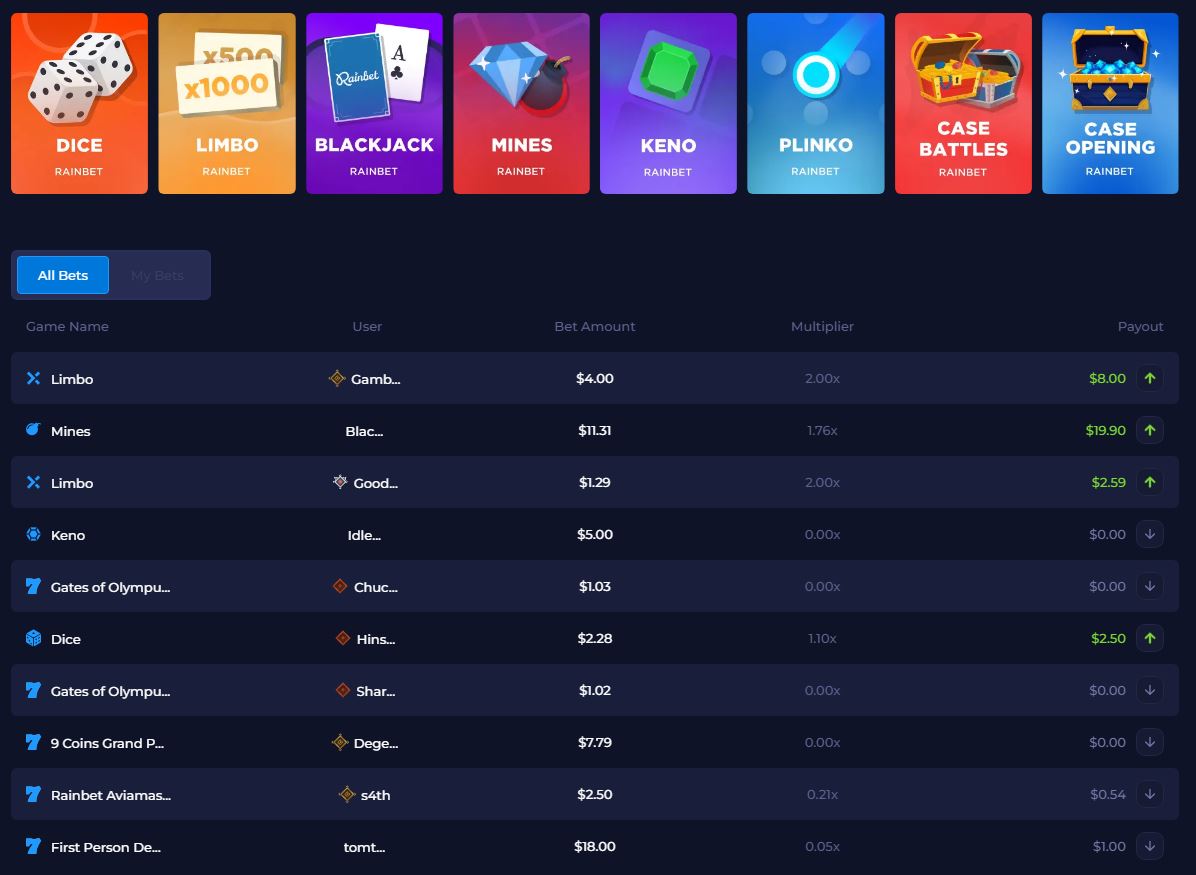
Rainbet, prowadzony przez RBGAMING N.V., to kompleksowy system hazardowy oferujący szeroki wachlarz opcji obstawiania, od gier kasynowych online i gier z krupierem na żywo po zakłady sportowe i gry CS.

Sekcja kasynowa oferuje setki gier od wiodących w branży dostawców, takich jak Hacksaw, Pragmatic Play, Play ‘n GO, NetEnt i NoLimit City, zapewniając najwyższej klasy wrażenia z gry.

Dzięki cotygodniowym i miesięcznym wyścigom, poziomom trudności, bonusom i regularnym promocjom gracze mają wiele możliwości zwiększenia swoich wpłat.

Akredytowany przez rząd Curaçao, Rainbet działa w wielu regionach na całym świecie, co czyni go dostępnym dla szerokiego grona odbiorców. Chcesz się zarejestrować? Zapoznaj się z naszym przeglądem kodów polecających Rainbet, aby zobaczyć pełne informacje o najnowszych bonusach powitalnych.

Gry kasynowe

Niezależnie od tego, czy dopiero zaczynasz przygodę z grami kasynowymi, czy jesteś doświadczonym graczem przyzwyczajonym do innych stron bukmacherskich, przekonasz się, że sekcja kasyna Rainbet jest łatwa w nawigacji i oferuje różnorodną kolekcję gier do odkrycia.Śledź ten link rainbet-plinko.com/pl/ Na naszej stronie

Porty

Na stronie znajdziesz szeroki wybór gier, takich jak sloty, gry stołowe RNG i Rainbet Originals. Co ciekawe, wszystkie z nich znajdziesz w sekcji „Sloty” na stronie.

Do wyboru są tysiące gier slotowych, co utrudnia wybór odpowiedniej gry. Na szczęście możesz skorzystać z szeregu filtrów i opcji sortowania, aby uprościć procedurę.

Nowe, Polecane, Popularne i Alfabetycznie to tylko niektóre z metod sortowania gier. Możesz również sortować gry według operatora, a do wyboru jest ich kilka, które szczegółowo omówimy w dalszej części recenzji.

Gry z krupierem na żywo

Ruletka na żywo, blackjack, bakarat, poker online i szereg gier można znaleźć zarówno z generatorem liczb losowych (RNG), jak i krupierem na żywo. Kasyno ma nawet dedykowane sekcje, do których dostęp można uzyskać, klikając odpowiednie linki w menu bocznym.

Oryginalne gry Rainbet

Oryginalne gry Rainbet to wyjątkowe gry losowe i zręcznościowe, które można znaleźć tylko w Rainbet. Przypominają oryginały dostępne na różnych stronach internetowych, takich jak Risk, ale można w nie grać tylko na tej konkretnej platformie.

Oto opcje:

  • HiLo
  • Hen Cross
  • Tower
  • Rock Paper Scissors
  • Wheel
  • Plinko
  • Dice
  • Limbo
  • Blackjack
  • Mines
  • Keno

Dostawcy gier

  • AvatarUX
  • Backseat PC gry
  • Gry
  • Wielkie granie
  • Plan
  • Gry Bullshark
  • Pogromca pazurów
  • Endorfina
  • EvoPlay
  • Fantazja
  • Piła do metalu
  • NetEnt
  • Gra sieciowa
  • Miasto NoLimit
  • Ośmiorniczka
  • OneTouch
  • Tylko odtwarzaj
  • PGSoft
  • Graj i idź
  • Odtwarzanie popowe
  • Zabawa praktyczna
  • Opublikuj Studia
  • Red Tiger
  • Odpręż się
  • Retro gry wideo
  • SlotMill
  • Smartsoft
  • Spinomenal
  • Thunderkick
  • VoltEnt (Wazdan)
  • Zillion

Reklama i korzyści

Aby pomóc Ci w dalszym zwiększaniu wpłat, możesz zmaksymalizować regularne promocje i korzyści od momentu założenia konta.

  • Bonus powitalny – Zdobądź nagrodę powitalną o wartości do 2100 $ oraz 60 darmowych spinów na automaty Practical Play.
  • Wyścig tygodniowy – Gracze, którzy zainwestują najwięcej pieniędzy w danym tygodniu, z pewnością podzielą się 10 000 $,
  • Wyścig miesięczny – Gracze, którzy zainwestują najwięcej pieniędzy miesięcznie, podzielą się 100 000 $.
  • Skrzynie z korzyściami – Odblokuj rakeback oraz nagrody dzienne, tygodniowe i miesięczne.
  • Harmonogram zachęt – Zdobywaj codzienne zachęty w oparciu o swoje podstawowe zachowania finansowe.

Instancje CS

Instancje można zdobyć w grze CS Cases, w której celem jest otwarcie skrzynki zawierającej skórki o wartości większej niż wydana na nią kwota.

Wartości sytuacji wahają się od 0,40 $ do ponad 5000 $. Im większe ryzyko podejmiesz, tym większe potencjalne korzyści.

Bitwy Instancji

Zamiast po prostu kupić Sytuację i ją otworzyć, możesz wziąć udział w Walce o Skrzynię. Celem tej gry jest, aby Twoja Sytuacja zawierała więcej cennych Skórek niż Skrzynia przeciwnika. Jeśli wygrasz, zgarniasz cały łup z obu Skrzyni.

Obsługa klienta

Strona internetowa Rainbet ma niebieski symbol dymku w prawym dolnym rogu każdej strony. Niezależnie od pory dnia, możesz uzyskać dostęp do rozmowy w czasie rzeczywistym, klikając ją.

Jeśli chcesz, możesz również wysłać e-mail lub skontaktować się z nimi za pośrednictwem jednego z ich kont w mediach społecznościowych.

  • E-mail (pomoc) – support@rainbet.com!.?.! E-mail (reklama i marketing) – marketing@rainbet.com!.?.! Telegram-https://t.me/rainbetcasino X-https://x.com/rainbetcom Instagram -https://www.instagram.com/rainbetcom Opcje płatności Kliknij zielony symbol „Portfel” na górze strony Rainbet, aby zasilić konto lub zlecić wypłatę

Kryptowaluty stanowią

większość listy akceptowanych metod płatności, podczas gdy Interac jest znacznie bardziej tradycyjną

opcją. Interac Bitcoin Ethereum Secure Litecoin Solana TRON LOT Chainlink Excellent Dai Zcash Dogecoin Cardano BNB Smart Chain Polygon

  • Hedera Hashgraph USD Coin Ripple Covered Ether Shiba Inu
  • Peanut
  • Wiewiórka Pudgy Penguins

BUSCAR

SIGUENOS EN FACEBOOK

Facebook Pagelike Widget

VISITAS